
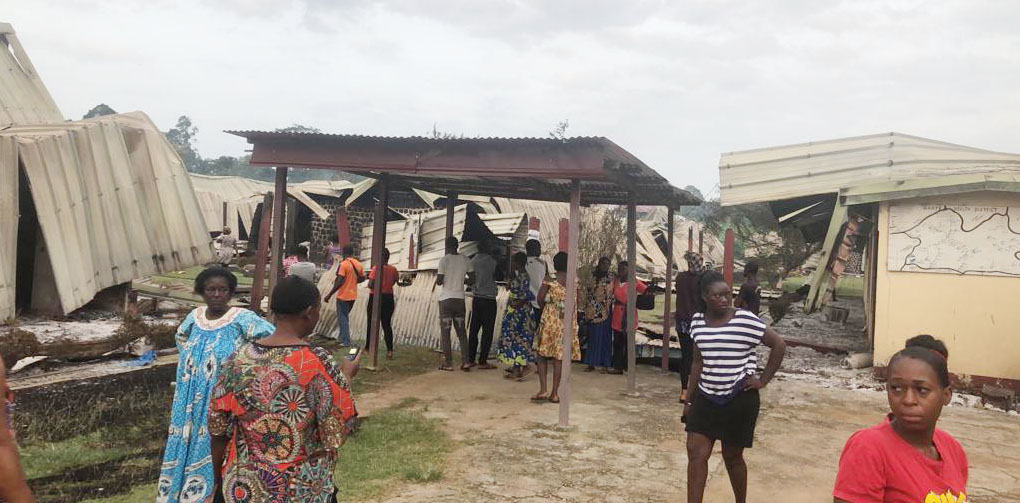
Fighting between government and separatist fighters has caused the closure of 18 percent of the few health facilities that existed in Anglophone Regions. This has left several communities uncovered health wise, and the situation is far beyond that, as the few existing ones are more a shadow of inadequate facilities that existed way before the conflict.
Since the Anglophone crisis started, several communities in the two Anglophone regions have been deprived of their right to health, either through outright closure of clinics and health centres, or through targeting of health workers. This has forced many of such facilities to shutdown, leaving thousands stranded.
The Northwest and Southwest Regions are experiencing a humanitarian crisis which according to OCHA, has led to the displacement of over 630,000 people into the country and more than 86,000 people to Nigeria.
In its recent report on the health sector in the crisis regions, OCHA revealed that, the crisis has “resulted in the collapse of essential services and infrastructure in some of the most affected areas. As of April 2023, approximately 18 per cent of health facilities have been forced to close, and a number of operational ones are struggling to function adequately”.
The blame for the collapsing health sector, is shared by both the military, and separatists, who in their various operations, have failed to respect health facilities as protected area. They have also targeted medical personnel. In several instances, government forces have attacked, shut down and even detained health personnel and closed operations, on the excuse that they also response to the health needs of wounded separatist fighters. In the same way, separatist fighters have also been accused of burning down health facilities for unclear reasons, sometimes, as a way to show strength or as a way of getting back to the government.
On December 27, 2021, a Doctors Without Borders, DWB nurse, Marguerite M., and ambulance driver, Ashu D., were arrested by Cameroonian authorities for providing neutral, independent, and impartial humanitarian aid to people in Cameroon’s Southwest region. Just weeks after, two more DWB’s staff members were detained while providing humanitarian aid. They were only released several months later, after DWB was forced to shut down its much-needed humanitarian health services to the population, first in the Northwest region and then the Southwest. Several clinics have also been forced to shut on the excuse that they treat separatist fighters. Several medical practitioners have also been detained on accusations that they treated separatist fighters. When this happens, other staff are scared off and forced to run away or abandon duty.
On the night of June 8, 2022, the Mamfe District Hospital, in Manyu Division of Cameroon’s Southwest Region, was burned down by a group that invaded the facility, firing guns in the air to scare occupants. The attack, destruction and burning down of the hospital effectively left over 85,000 people who depended on it, stranded without a better alternative. On December 09 2022, a joint CHRDA and Anglophone Database Of Atrocities report indicted separatist fighters for the attack and burning. CHRDA, alongside several humanitarian NGOs and activists condemned the act.
Similarly, government soldiers on November 14, 2021, stormed the St. Elizabeth Catholic General Hospital, Shisong, one of the most advanced hospitals in Cameroon, saying they were looking for separatist fighters that were allegedly receiving treatment in the hospital. After ransacking the facility and finding no one, the soldiers went on to threaten to shoot reverend sisters who serve and run the facility. They also threatened to burn it down.
The guards on duty were arrested tortured, and according to the Director of the hospital, asked at gunpoint to show where separatist fighters were hidden. The guards reportedly told them that no fighters were in the facility. “Not satisfied with the explanations from the guards, the military exercised brute force on the security guards. They were severely beaten with the butts of the gun and kicked with military boots. They all sustained injuries and swollen faces…”, the Director of the hospital, Dr. Sr. Helen Anshoma Mbuoh said.
While OCHA’s July reports focuses on the 18 percent that have completely shut down operations, the reality is that others that are operating are not in full capacity and that many people are still unable to access health facilities, either because of road blocks, fighting, or lack of repairs on existing structures. Health personnel too are abandoning duty for fear of being accused and targeted for treating either government soldiers or separatist fighters. This is fast forcing many to fall back to the use of traditional medications, which are mostly untested and sometimes cause fatal health problems for users, especially as it is unregulated.
Through their actions and policies, separatist fighters and government troops are depriving thousands of people in the conflict area, of their right to health.
In its Article 19, the First Geneva Convention states clearly that, “Fixed establishments and mobile medical units of the Medical Service may in no circumstances be attacked, but shall at all times be respected and protected by the Parties to the conflict. Should they fall into the hands of the adverse Party, their personnel shall be free to pursue their duties, as long as the capturing Power has not itself ensured the necessary care of the wounded and sick found in such establishments and units.” In the case of Anglophone crisis, health facilities have rather been targeted.
On its part, Article 25 of the Universal Declaration outlines the right to health, stating that “Everyone has the right to a standard of living adequate for the health and well-being of himself and of his family, including food, clothing, housing and medical care and necessary social services, and the right to security in the event of unemployment, sickness, disability, widowhood, old age or other lack of livelihood in circumstances beyond his control.” By attacking health facilities, and at sometimes closing them, or arresting and detaining personnel, government forces have indirectly denied many, their right to health. This is same for separatist fighters who have been accused of burning down health facilities too.
The Additional Protocol to the Geneva Convention mandates that “No health-care professionals may be punished for having carried out activities compatible with medical ethics, such as providing impartial care (AP (additional Protocol) I, Art. 16) in Cameroon the government failed to respect this, and by constantly going after DWB staff, they were forced to end operations, leaving hundreds of thousands who cannot afford health care helpless.
The Additional Protocol to the Geneva Convention also states that “Persons engaged in medical activities may not, unless required to do so by law, be compelled to give information concerning the wounded and sick who are or have been under their care either to their own party or to an adverse party, if this information would prove harmful to the patients or their families (AP I, Art. 16(3). This has particularly been the bone of contention between government forces who at certain instances had gone on to seize patients on treatment and then gone ahead to execute or disappear them on claims that they are separatists. All these, have contributed to the health sector in Anglophone regions shutting down, leaving many without viable options.
By Andrew Nsoseka
 Jade Cameroun